Here is a beautifully structured, informative blog post designed to educate your clients and drive bookings at La Gevara.
Botox vs. Chemical Peels: What’s the Difference?
When you begin exploring non-surgical anti-aging treatments, you will quickly encounter two of the most popular and effective options on the market: Botox and chemical peels.
Because both treatments are famous for taking years off your face and leaving you with a refreshed, youthful appearance, many patients ask us which one is “better.” The truth is, they aren’t competitors at all. They perform two entirely different jobs, targeting different layers of your face.
If you are trying to decide which treatment is right for you, here is a simple breakdown of how they work and what they treat.
Botox: Targeting the Muscle
Botox® (along with other neuromodulators like Dysport® and Daxxify®) works entirely beneath the surface of your skin.
Every time you smile, frown, or raise your eyebrows, your facial muscles contract, causing the skin above them to fold. Over time, these repeated movements cause those temporary folds to become permanent “dynamic wrinkles.”
How it works: Botox is a highly purified protein that is carefully injected into specific facial muscles. It temporarily interrupts the signal between the nerve and the muscle, allowing the muscle to safely and gently relax. As the muscle relaxes, the skin above it smooths out. Best for: * Horizontal forehead lines
-
Frown lines (the “11s” between the eyebrows)
-
Crow’s feet around the eyes
-
Preventing new expression lines from forming
Chemical Peels: Targeting the Skin Surface
While Botox handles the muscles underneath, chemical peels focus exclusively on the quality, texture, and tone of the skin itself.
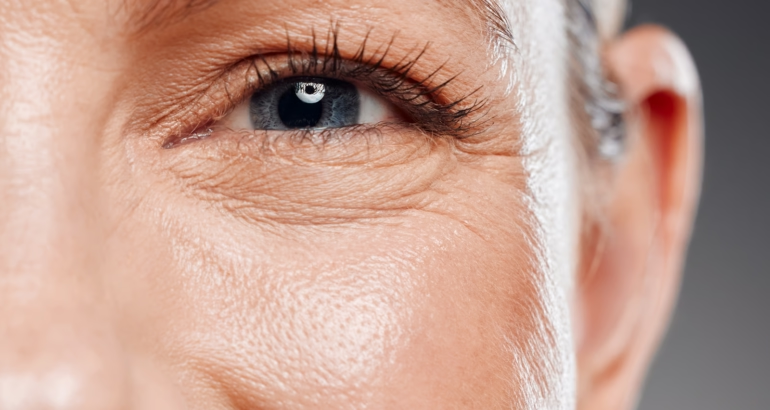
Over time, dead skin cells, sun damage, and environmental pollutants accumulate on the surface of your skin, leading to a dull complexion, uneven skin tone, and rough texture.
How it works: A chemical peel involves applying a customized, medical-grade solution to the face. This solution safely dissolves the bonds holding dead and damaged skin cells together, causing them to gently peel away over a few days. This process triggers rapid cellular turnover, revealing the fresh, healthy, and luminous skin underneath. Best for:
-
Fading hyperpigmentation, sun spots, and melasma
-
Smoothing rough skin texture and very fine surface lines
-
Softening acne scars and clearing active breakouts
-
Restoring a bright, radiant, and even skin tone
The Verdict: Which One Do You Need?
The easiest way to remember the difference is this: Botox handles the wrinkles caused by movement, while chemical peels handle the canvas of the skin itself.
If your primary concern is deep creases when you make facial expressions, you need a wrinkle relaxer like Botox. If your concern is dark spots, dullness, or rough texture, you need a chemical peel or a resurfacing treatment.
Are they better together? Absolutely. In fact, combining these treatments is one of the best ways to achieve a comprehensive “liquid facelift.” By relaxing the muscles that cause deep wrinkles with Botox, and refining the surface of the skin with a peel, you get a flawlessly smooth, radiant, and completely natural-looking result.
Ready to Refresh Your Look? At La Gevara, our medical providers understand that every face is unique. Whether you need the smoothing power of Botox, the brightening effects of a clinical peel, or a combination of both, we are here to design a customized treatment plan just for you.

1 Comment
Miki Williams
I appreciate excellent customer support – your team is something else, as usual!